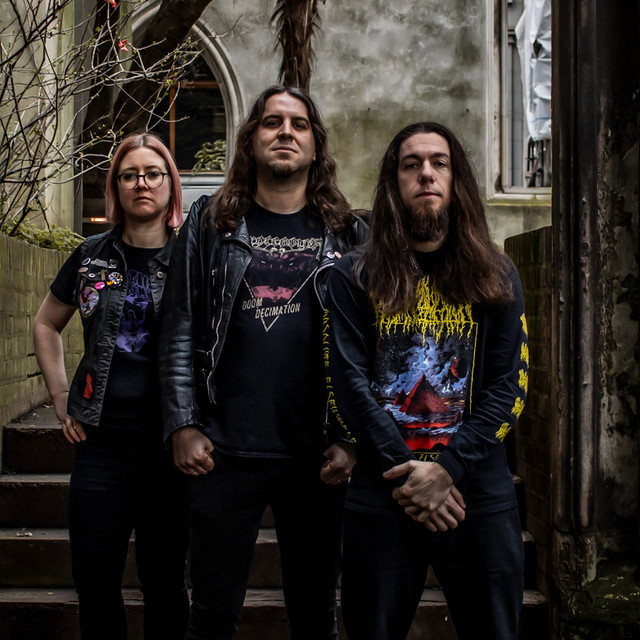
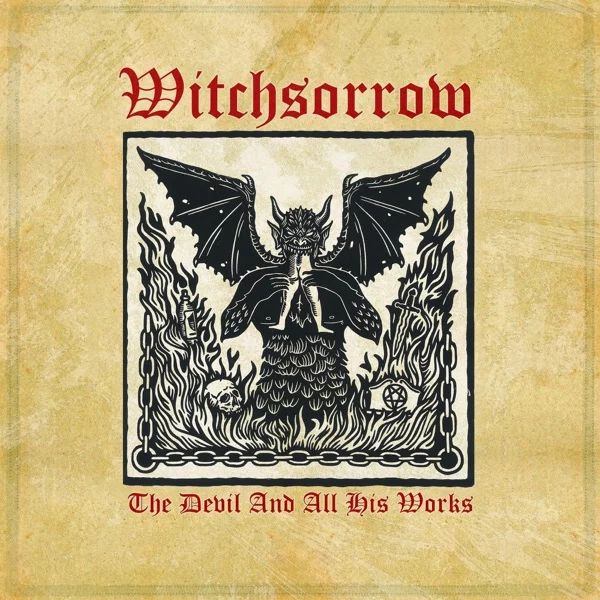
Witchsorrow has never hidden its intentions: resurrect the most orthodox doom, the kind that owes everything to Black Sabbath and Candlemass, without frills or concessions to modernity. With Hexenhammer, the English trio confirms this approach with almost monastic rigor. From the very first measures, the riff settles in heavy, thick, stretched to the bone, and the singer’s voice rises above it with that characteristic drawling inflection of the genre, half-incantation half-lament. We’re on familiar ground, but traversed with a seriousness that commands respect.
The weight of the riff as sole religion
What strikes first is the density of the sound. The guitars occupy all the space, saturated without being muddled, with a bass that follows the riff in doubling rather than trying to break away from it. The drums, meanwhile, remain understated: rare fills, a tempo that accelerates only to fall back into the mud. This is a record that moves in stages, in waves, never through abrupt breaks. The longest tracks take their time establishing tension, let it marinate, then release it in a final riff even more massive than everything before. This patience, characteristic of traditional doom, is here perfectly controlled: nothing feels artificially stretched, each minute has its reason for being.
Occult imagery without showiness
The occult atmosphere running through the album has nothing theatrical or kitsch about it. It comes mainly through sound texture: guitars that sound like they’ve been pulled from a damp cellar, production that favors thickness over surgical clarity. The vocals, often doubled or pushed back in the mix, emphasize this sense of incantation more than classical vocal performance. Candlemass comes to mind inevitably for the dark lyricism, Black Sabbath for the heavy and almost bluesy groove of certain passages, but Witchsorrow never tries to hide its sources: it assumes them as a heritage to honor rather than surpass.
The limits of faithfulness
If there’s something to fault Hexenhammer for, it’s precisely this almost overly applied faithfulness to the genre’s rulebook. The record never really surprises, never deviates from the trajectory laid out by its illustrious models. Fans of pure doom will find exactly what they came looking for: massive riffs, a funeral atmosphere, total absence of melodic compromise. But those hoping for evolution, a more marked personal touch in the songwriting, will leave disappointed. The album functions more like a collectible piece than an audacious artistic gesture, which isn’t a flaw in itself, but limits its reach beyond the circle of already convinced purists.
Hexenhammer is a record that fully embraces its classicism and does so with rare conviction. Witchsorrow reinvents nothing, but executes its score with a density and consistency that command admiration for anyone who loves doom in its rawest and slowest form. It’s a solid album, crafted for genre enthusiasts, but one that will never try to convince those who remain impervious to this assumed slowness. A niche record, but a well-maintained one.