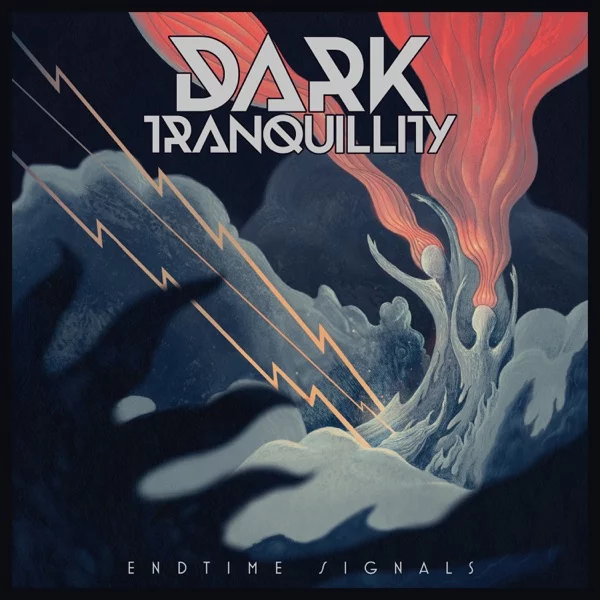
There’s something oddly reassuring about finding Dark Tranquillity in 2020 with an album called Moment. No convoluted concept, no stylistic overhaul announced with great fanfare: just a band capturing a snapshot of what they do best, with the meticulous care that has defined them all along. The lineup has shifted around Mikael Stanne, but the sonic identity remains unwavering: sharp guitars wrapped in melody, keyboards that tint each track with discreet electronic melancholy, and that raspy voice that never sought reinvention because it simply doesn’t need it.
The Pulse of Phantom Days
Right from the opening with Phantom Days, the tone is set: a clean riff, a structure alternating biting verses with an airy chorus, carried by synths that float rather than overwhelm. It’s the band’s DNA compressed into four minutes, efficient but never truly surprising. The track works wonderfully as a concert opener, you can easily picture it there, but it doesn’t shake anything we already know from the band’s discography. That’s the core problem with Moment: each track is well-constructed, every transition thought through, but the overall effect feels like it’s moving along already-laid tracks.
Clockwork Deconstruction and the Science of the Chorus
The album has its moments of grace, especially on Clockwork Deconstruction, where the rhythm becomes more staccato and keyboards almost dialogue with Stanne’s growls. You sense real arrangement expertise here, an attention to detail that keeps everything from sounding mechanical despite the title. Elsewhere, tracks like Our Proof Through the Night or Standstill lean on airier melodies, almost floating, that contrast with the genre’s usual roughness without completely betraying it. The production is clean and spacious, letting each instrument breathe, giving the record a polished texture, almost too smooth at times.
A Consistency With Its Drawbacks
That’s the whole paradox of Moment: there’s virtually nothing to fault about this record on an execution level, yet it struggles to leave a lasting mark. The riffs are good, the choruses calibrated, the atmospheres controlled, but you search in vain for that moment that grabs you, that roughness that keeps the album from becoming mere background sound. The band has reached such a level of mastery that it sometimes seems to operate on autopilot, reproducing a formula that worked on previous records without trying to shake it up. You’re never disappointed, but you’re never transported the way the best moments in their catalog can transport you.
Moment will remain an honest record, technically flawless, confirming the solidity of a band with nothing left to prove. Longtime fans will find everything they love: Swedish melancholy, discreet keyboards, Stanne’s unmistakable voice. But for those seeking a spark, a risk taken or a track that endures, disappointment awaits, not because the record is bad, but because it settles for being safe where we hoped for a breakthrough. An album that holds its place without shifting it, true to its title: a suspended moment, pleasant, but quickly erased by what comes next.