After the turbulence that saw several historic members leave in quick succession, Morbid Angel returns in 2017 with a revamped line-up featuring Steve Tucker back on vocals and bass after a long absence, supported by a new drummer. Kingdoms Disdained arrives in a climate of skepticism: the band must prove it can still embody the spirit that forged its legend, far removed from the experiments that had divided its fanbase a few years earlier. From the opening seconds, the message is crystal clear: Trey Azagthoth has tightened the ranks and plunges back into raw, nervous material with no electronic flourishes.
Back to Basics
The album operates in short, direct bursts. Azagthoth’s riffs retain that instantly recognizable signature: dissonant tremolos that seem deliberately going haywire, abrupt silences, surges back into acceleration. The opening track sets the stage with a tempo alternating between blast and heavy mid-tempo, while Tucker’s voice, harsher and less cavernous than his predecessor’s, imposes a rough, almost aggressive presence. You feel the band wanting to reconnect with an urgency it had lost, even if it means sacrificing some of the ceremonial grandeur that seasoned its best records.
Garden of Disdain, the Album’s Pivot
The track that got a music video, Garden of Disdain, crystallizes the album’s strengths: a main riff in sixteenth notes looping obsessively, a rhythm section that breaks its momentum to restart, and vocals alternating between deep growls and drier eruptions. It’s arguably where the new rhythm section shines brightest, delivering technical drumming that serves the composition rather than burying it under virtuosity. Elsewhere, the album sometimes struggles to reinvent itself: certain mid-album tracks circle around structures heard elsewhere in the band’s catalog, without adding that touch that would make the listen feel essential.
The production, dry and compact, aligns perfectly with the intent: every instrument is clearly audible, Tucker’s grainy bass hugging the riffs rather than simply doubling them, guitar tones with a sharp bite that avoids oversaturation. This sonic choice gives the whole thing an almost organic dimension, far from the overpolished production often criticized in modern death metal. Yet this mixing restraint also reveals the limitations of the songwriting: when the riff alone can’t carry a track, nothing compensates, and certain passages start sounding dangerously similar from one song to the next.
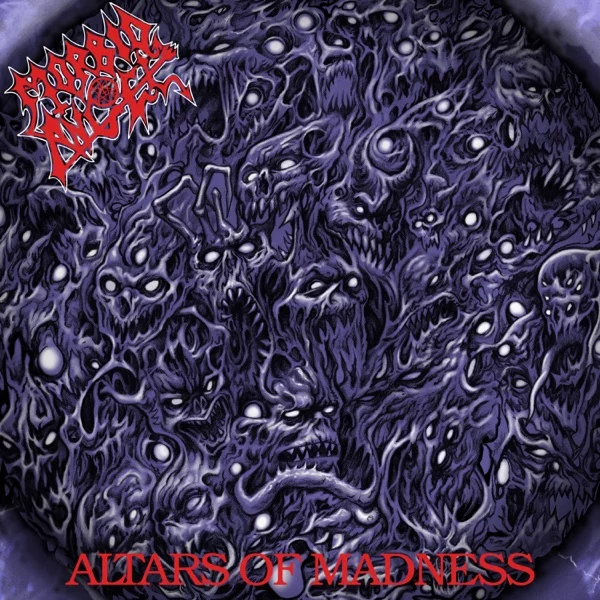
Ultimately, Kingdoms Disdained doesn’t have the foundational scope of Altars of Madness or the relentless efficiency of Covenant, but it succeeds at its main goal: reasserting an identity after a period of drift. You find a focused Morbid Angel here, sometimes repetitive, yet genuinely convincing. It’s not the album through which to discover the band, but for those already versed in its mythology, it’s an honest piece that holds up its end of the bargain without trying to reinvent an already well-established formula.