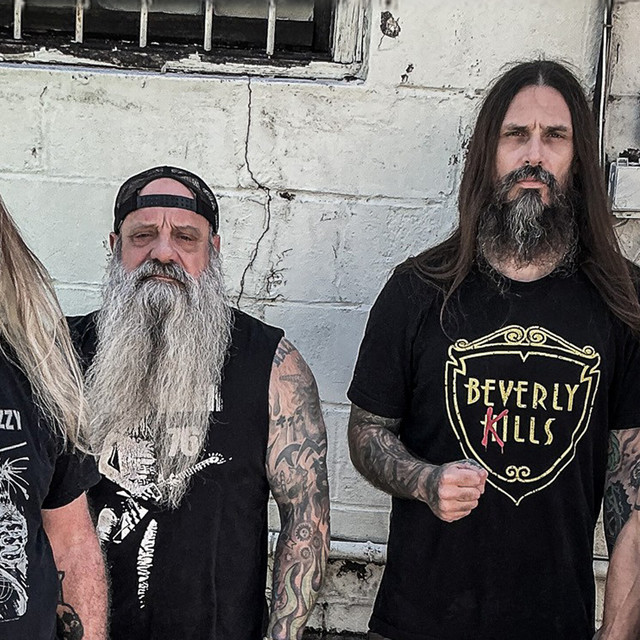
Crowbar’s second album, this self titled record from 1993, cements the place of Kirk Windstein’s band in the New Orleans sludge landscape. Heavier and more stripped down than ever, it pushes the art of the slow, crushing riff to the extreme. It is also the record that gave the band its first taste of wider visibility.
The weight of the riff
Everything here revolves around heaviness. The deeply detuned guitars roll out massive riffs, played at slow tempos that flatten the listener. Every bar feels cut from concrete.
That minimalist approach favors impact over complexity. Crowbar seeks not virtuosity but raw power, the kind that rattles speakers and bodies alike.
Kirk Windstein, between rage and melancholy
Kirk Windstein’s voice alternates hoarse screams with more melodic lines, carrying lyrics shot through with pain, doubt and resilience. That emotional dimension sets the band apart from a purely nihilistic sludge.
The cover of Led Zeppelin’s No Quarter illustrates that sensibility. By slowing and thickening the classic, Crowbar reveals a new gravity in it, faithful to its aesthetic of weight.
A cornerstone of Southern sludge
This record played an important part in the recognition of New Orleans sludge. Carried by a video that circulated on television, it opened the band to a public beyond the underground scene alone.
Its influence can be measured by the place Windstein holds in that scene, notably through his later involvement in Down. Crowbar appears here as a laboratory for the heavy Southern riff.
Three decades on, this self titled album remains a reference for every lover of ponderous riffs. Its avowed simplicity and emotional intensity make it a plain, sincere record with no frills. For anyone who loves slow, massive metal, it remains a safe bet, as crushing as it is deeply human.