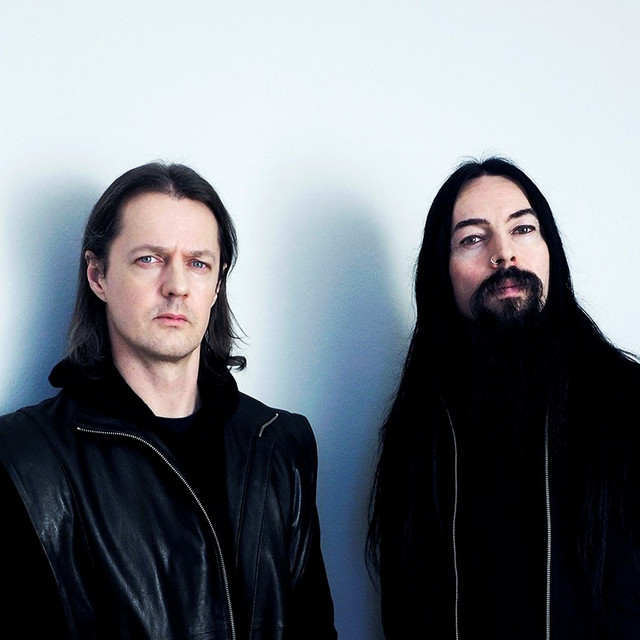
Linking Edvard Munch’s name to Satyricon might have seemed like just another museum operation, one of those image marriages meant to lend cultural prestige to a band that hardly needs it anymore. Yet listening to this album, it quickly becomes clear that the Norwegian duo isn’t trying to respectfully illustrate famous canvases: they’re attempting to translate the anguish, solitude and nervous tension that run through the painter’s work into sound. The result is a hybrid record, conceived as much as a soundtrack as a metal album in its own right, and that’s precisely where both its appeal and its limitations lie.
The Silent Scream
Satyr and Frost haven’t played the glacial black metal of their early days for a long time, and this record confirms the direction taken since the albums of the 2010s: a tightened format, tempos that breathe, a voice oscillating between clear singing and harsh scraping. The tracks work in waves rather than frontal riffs, with keyboard layers that evoke anxious chamber music more than sonic warfare. Sometimes you think of tense gothic rock, sometimes of quasi-cinematic music, carried along by Frost’s drumming which, faithful to itself, maintains an almost mechanical precision even in the most stripped-down passages.
Matter That Eludes
The problem is that conceptual ambition ends up hindering momentum. The tracks often seem built to accompany an image rather than to fully exist on their own, and listeners seeking the visceral tension of the band’s finest hours may leave disappointed. There are beautiful textural ideas, moments where the guitar becomes almost minimal to make way for heavy silence, but the whole sometimes lacks that cohesion that made more direct albums so powerful. You can sense the band thinking through each note, calculating the desired effect, at the expense of a spontaneity that was long its trademark.
Between Canvas and Vinyl
Credit must be given to the duo for the courage not to take the easy route: rather than deliver another album calibrated for festivals, Satyricon chooses a risky form, closer to a sound piece than a traditional album. The instrumental passages, more numerous than usual, establish a suspended atmosphere that can captivate at certain moments and tire at others depending on the listener’s mood. The careful production leaves room for each element without ever crushing everything under unnecessary saturation, which serves the contemplative purpose sought here well.
Ultimately, this record plays out as an experience apart in the band’s discography rather than as an album of the same caliber as its classics. It will appeal to those who appreciate Satyricon in its most stripped-down and conceptual phase, but will likely perplex fans of the sharp black metal from their beginnings. An honorable curiosity, not a high point.