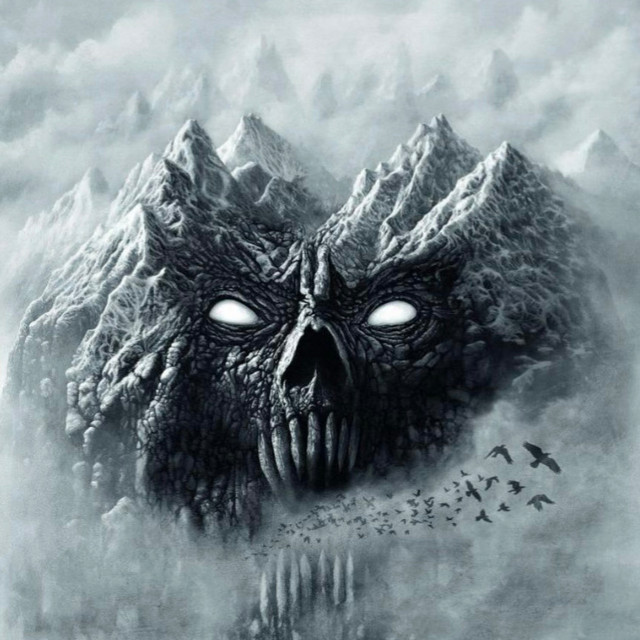
There is something strangely final about this record, even without knowing it at the time: All Shall Fall would be the last to unite this lineup around the band’s emblematic singer and guitarist. The title sounds almost like a premonition, and the cover, with its icy peaks and brooding sky, extends the Blashyrkh imagery without ever falling into pure repetition. You find that imaginary realm which has always set Immortal apart from the rest of the Norwegian scene, far from the satanic provocations of its contemporaries, closer to a mythology straddling glacial fantasy and frontal rage.
Musically, the album returns to a more direct ferocity after the more massive structures of Sons of Northern Darkness. The opening riff of the title track works like an alarm signal: sharp, repetitive, built to hit rather than to hypnotize. The rhythm, carried by an electric and dry drum strike, pushes the tracks forward without ever seeking atmospheric variation. You are far from the melodic flashes of At the Heart of Winter: here, everything is tightened, almost martial, with tempos alternating between frontal charge and funeral march slowdowns, like in certain mid-track passages that let the structure breathe before launching forward again.
The bite of the riff
The guitar remains the beating heart of the record, with that grainy and cutting sound that has always been the band’s signature. The tremolos chain with almost mechanical precision, and certain passages, like those opening the second half of the album, evoke more a cavalry charge than a glacial epic. The voice, raspy and shrill, remains true to itself: it howls rather than sings, driven by a rage that seems almost personal in how inhabited it is. You sense tension in the delivery, as if each vocal line sought to say something beyond the band’s usual winter invocations.
The production, recorded in the historic Norwegian studios associated with the band, favors clarity over the lo-fi grit of their beginnings. Every instrument is audible, sometimes too much so: the bass, new in this lineup, brings an additional grain that enriches the bottom end without ever stealing the spotlight from the guitars. This choice of cleaner production might unsettle purists expecting rawer savagery, but it serves the clarity of the compositions, which rely more on effectiveness than experimentation.
A testament without knowing it
What strikes on relistening is the cohesion of the whole: no weak track, no filler, but also little risk-taking. The band plays on familiar ground, the one it has shaped over the years, and does so with ruthless efficiency. You find neither the brilliance of Pure Holocaust nor the epic scope of Sons of Northern Darkness, but a form of sharp maturity that fully embraces its identity. All Shall Fall invents nothing, but closes a chapter with dignity, without unnecessary flourishes, and perhaps that is what makes it more striking today than it seemed at release.