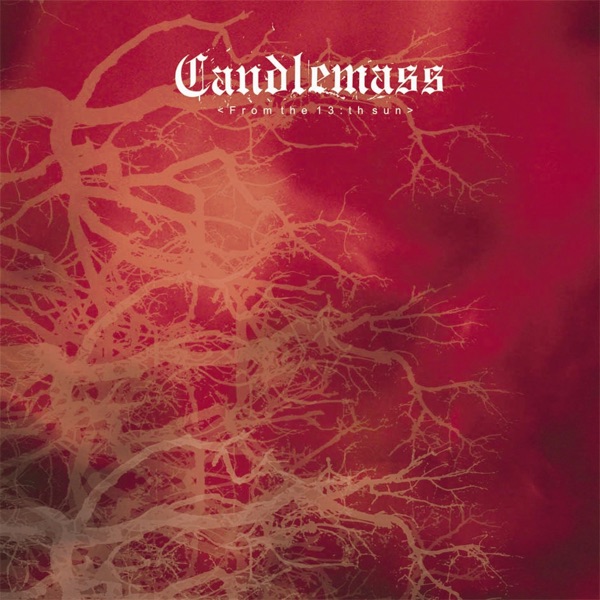
Few albums lend their name to an entire subgenre. Epicus Doomicus Metallicus (1986), the debut by Sweden’s Candlemass, is one of them: its makeshift Latin title would come to define epic doom metal. Conceived by bassist and songwriter Leif Edling, the true brain of the band, this masterwork lays the foundations of a slow, solemn and grandiose music, running against the fast trends that dominated metal at the time. Where thrash sped up and classic heavy chased efficiency, Candlemass took the opposite road: that of embraced heaviness, of gravity as an aesthetic principle.
Slowness raised to majesty
A direct heir to Black Sabbath, Candlemass slow the tempo even further, thicken the riffs, and turn heaviness into ceremony. Each track advances like a funeral procession, with massive guitars and dramatic harmonies that create a sense of fate. Far from dull, this slowness creates constant tension, a sense of tragic imminence that holds the listener rapt.
Pieces like Solitude, Demons Gate and A Sorcerer’s Pledge embody this art of gravity: the riff is no longer merely powerful, it becomes monumental, almost architectural. Every note seems carved in stone, and the record advances with the solemnity of a ritual whose outcome remains unknown.
An operatic voice
The record’s great distinction is the voice of Johan Langqvist, brought in as a guest singer for the sessions. His powerful, near-lyrical timbre moves away from extreme-metal codes to embrace a theatrical, dramatic dimension. That operatic voice, soaring above the leaden riffs, gives the album its unique majesty and its instantly recognizable character.
The contrast between instrumental heaviness and vocal elevation becomes the very signature of epic doom, a formula countless bands would try to reproduce. Rarely has a single vocal performance so marked a genre, to the point of defining an ideal Candlemass would pursue throughout their career.
A founding act
On release the album went relatively unnoticed, hampered by limited distribution and a context unfavorable to slow metal. But its influence has grown steadily over the years. It is now regarded as one of the absolute pillars of doom metal, a reference for Solitude Aeturnus, My Dying Bride and an entire later scene that would acknowledge its debt.
With only six tracks of rare intensity, Epicus Doomicus Metallicus proves that slowness can crush as hard as speed, and that heaviness can reach the sublime. Each piece unfolds a broad architecture, giving the riffs time to settle and the atmospheres room to bloom fully. Few records have so thoroughly imposed an aesthetic from their very first appearance, and its influence still resonates throughout contemporary doom. A timeless classic, the official birth of a genre that has never disowned its founding act. Rating: 9.