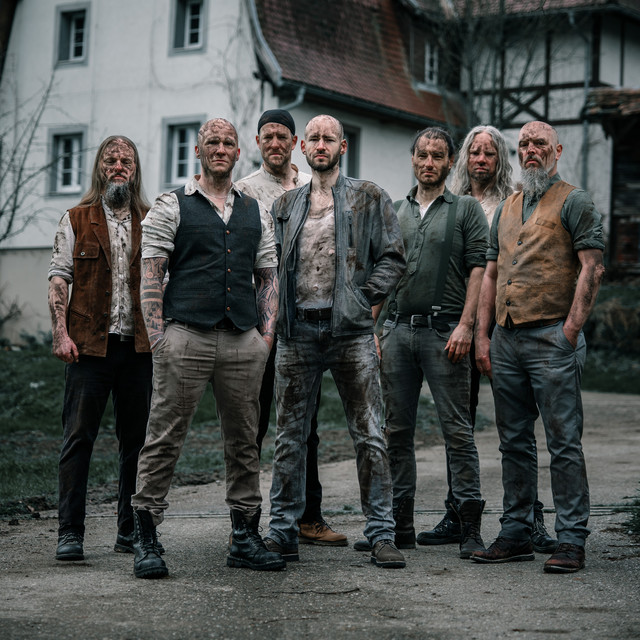
With Jenseits, Finsterforst closes a cycle begun years ago around the Black Forest and its legends, and does so with an scope that confirms its unique place in Germanic folk metal. The title, which evokes the idea of an afterlife, a passage to another world, sets the tone for an album conceived as a journey rather than a succession of isolated tracks. From the opening minutes, you find that duality inherent to the band: the rawness of black metal that scratches and the melodic breath of the accordion that comes to soften, then warm, the whole thing.
The accordion as compass
What strikes you once again with Finsterforst is how the accordion is never a folkloric gimmick slapped onto metal riffs. It structures the songs, brings breathing room, prepares the buildups in intensity and closes melodic passages before the growls take over again. On Jenseits, this instrument seems even more integrated into the architecture of the compositions, almost like a second voice that dialogues with the guttural vocals rather than simply accompanying them. The guitars, meanwhile, alternate between icy tremolos inherited from black metal and thicker, almost heavy riffs that anchor the album in something more massive than some of the band’s past work.
An epic that takes its time
The songs here embrace generous lengths, and the band takes advantage to build genuine dramatic arcs rather than string together choruses. There’s a will to tell something, to convey a journey more than to tick the boxes of a song format. This approach may throw the impatient listener off, but it pays off in the long run: the rhythmic relaunches always come at just the right moment, carried by drumming that knows how to hammer down as well as slow down to let the melodic passages breathe. The production, dense yet clear, allows each element, from the bass to traditional instruments, to find its place without the whole becoming muddled.
The vocals alternate between harsh growls, quite typical of black metal, with clearer sung passages that punctuate moments of emotional shift. This vocal variation, coupled with acoustic arrangements scattered throughout, gives the album an almost cinematic quality, as if each track accompanied a specific scene from a larger narrative. You inevitably think of Rastlos or Zerfall at their peak, but Jenseits pushes this epic logic even further, even if it sometimes sacrifices immediate impact for the sake of the work’s overall coherence.
Back in the forest, but further on
What ultimately impresses with Jenseits is the band’s ability to stay true to its identity while avoiding repetition. You immediately recognize the Finsterforst touch, that atmosphere of dense, mystical, almost threatening forest, but the arrangements seem more ambitious, the transitions more carefully crafted, the songwriting more mature. It’s not an easy access album, it demands time and multiple listens to grasp all its nuances, but that’s precisely what makes it a proposition that holds up. With Jenseits, the band delivers one of its most accomplished albums, a record that confirms its position as a reference point in German folk metal without ever giving in to easy solutions.