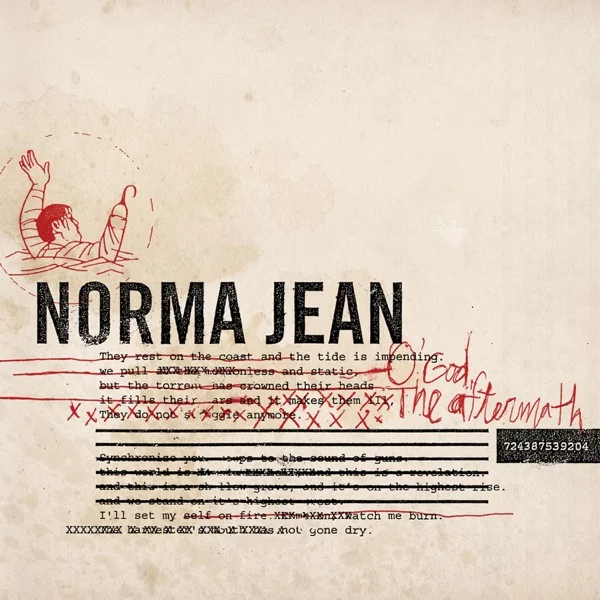
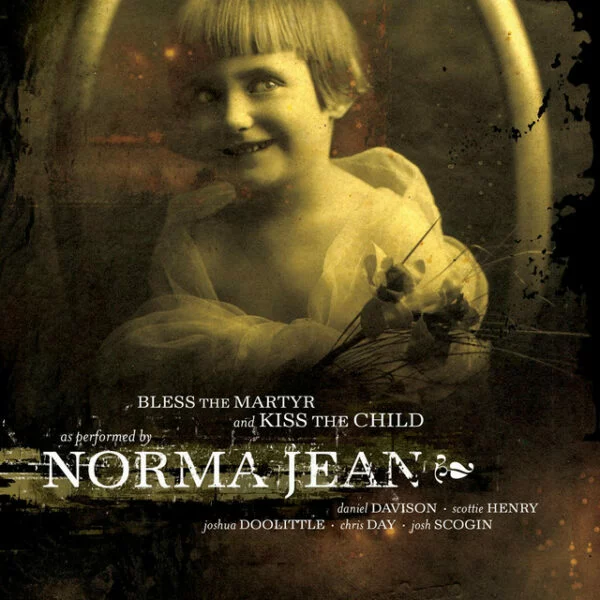
Norma Jean has never been in the business of making things easy, and Deathrattle Sing for Me drives that point home with almost brutal clarity. The title sets the tone on its own: a dying breath turned into song, an agony reshaped into performance. The Georgia band, a benchmark for the most dissonant strain of metalcore, keeps digging the trench it first carved out in the early 2000s, with no interest in softening the edges for a wider audience.
The rattle as melody
What hits first is how the guitars refuse straight lines. Riffs veer off at unpredictable angles, stop dead, then restart on a different tempo, as if the song’s structure were being rewritten in real time. The vocals chase that chaos with a hoarse fury, screamed rather than sung, giving the impression of a body running out of air that keeps howling anyway. There is something visceral in this approach that recalls the band’s most abrasive early years, without feeling like a rehash: the dissonance here serves a purpose, it is never gratuitous.
Raw self-production
The record was self-produced by the band, and it shows in the grain of the sound, more organic and less polished than some previous efforts. Silence carries as much weight as noise here: near-bare passages give way to tense breathing room before everything explodes back into broken rhythms. The drums in particular act as a chaotic conductor, forcing breaks that destabilize the listener right when they think they have found solid ground.
Loyal to the abrasion
One could argue the band’s unpredictability has become somewhat predictable, given how long controlled chaos has been its trademark. But it is precisely this loyalty to a harsh sonic identity that makes the listen convincing: there is no melodic compromise, no radio-ready chorus, just a constant tension that never truly lets go. Fans of more accessible metalcore will likely feel lost here, but that was clearly never the target audience.
Deathrattle Sing for Me is not a record trying to convert newcomers to chaotic metalcore: it speaks to those who already know what they come to Norma Jean for, and it delivers without restraint. It is a demanding album, at times difficult to access, but one with an internal coherence rare in a style where technical excess often spins in place. The band proves once more that it remains one of the few acts able to turn chaos into structure, and dissonance into a signature recognizable among a thousand others.