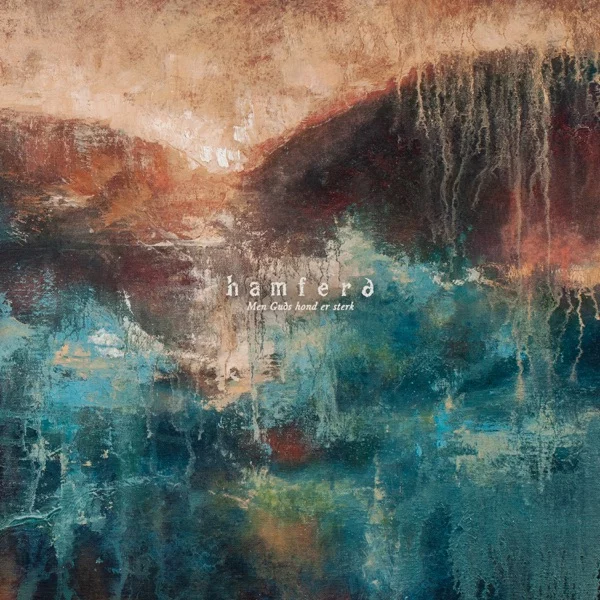
There is something almost liturgical about the way Hamferð builds their albums, and Támsins Likam is no exception to this rule. From the opening moments, the Faroese band establishes an atmosphere of gravity that never wavers, carried by cavernous growls and a clean vocal that hovers above the riffs like a voice from elsewhere. This is not doom that seeks to crush through sheer heaviness alone: it is music that takes its time, that breathes between bass drum hits, that lets silence do its part of the work.
A voice bearing grief
The clean vocal is the element that immediately sets this album apart from the mass of contemporary death-doom. Where many bands in the genre are content to alternate growl and clean as a simple contrast effect, here the high voice seems to carry a melody that would almost exist independently of the guitars, almost like a traditional chant grafted onto a metal architecture. The growls, meanwhile, remain deep without ever sinking into guttural caricature: they accompany, underline, punctuate, without ever crushing the whole under an indigestible mass.
The guitars weave tapestries rather than walls, with chords that sound almost like string harmonies, a sound clear enough in the mix to let every nuance shine through. The tempos remain slow, sometimes funeral-like, but never static: there is real dramaturgy in the way the songs build in intensity, often over long passages where the drums slow down even further before building again. You feel a band that thinks of its compositions as paintings rather than successions of riffs, with real attention paid to overall dynamics rather than immediate effectiveness.
The weight of the landscape
What also strikes you is this sense of space that emanates from the album, as if each instrumental passage sought to evoke something mineral, maritime, something battered by the winds. You don’t always know the exact meaning of the lyrics, sung in the band’s native language, but the general atmosphere is enough to convey a form of contemplative melancholy, far from the pure nihilism sometimes found in the genre. There is a form of funeral beauty that emerges from the whole, almost hymnic in places, which brings this album closer to a ceremony than to a simple concert.
Endurance rewarded
The main pitfall of such an album is obviously the question of listening: it demands time, patience, a frame of mind that not everyone necessarily wants to devote to an album of this scope. The songs stretch out, field recordings punctuate certain passages, and you have to accept letting yourself be carried along without expecting an immediate climax at every listen. But for those who accept this contract, the reward is real: few bands in this register manage to maintain such consistency over time without ever falling into repetition or taking the easy way out. Támsins Likam confirms that Hamferð occupies a unique place in current death-doom, less through radicality than through the rightness of its writing and the sincerity of its atmosphere. An album that demands commitment, but one that fully deserves it.