After the melodic shift initiated on Morning Star, Entombed doesn’t backtrack with Inferno, instead extending that trajectory by thickening it. The album embraces a hybrid of traditional death metal and death’n’roll, determined to keep groove at the center rather than chasing speed or technicality. We find that fizzy guitar sound inherited from Sunlight Studio, but it serves a more direct songwriting approach here, almost garage-like in places, where riffs loop with an almost hypnotic insistence.
A groove that sometimes gets bogged down
The rhythm section remains the group’s main weapon: square structures, mid-pace tempos that give way to brutal but never gratuitous accelerations. The vocalist keeps that characteristic raspy tone, a guttural but articulate delivery, carrying refrains that are sung more than screamed in places. The problem is that the album struggles to reinvent itself over its duration: the tracks follow one another without always standing out from each other, and while the writing remains effective, it lacks those flashes that made the group’s foundational records so powerful. You sense a seasoned band that masters its vocabulary but sometimes seems to circle around its own gimmicks.
Bright spots that save it
Fortunately, certain tracks stand out thanks to more incisive guitars, solos that break the rhythmic monotony, and a production that favors analog warmth over digital coldness. There’s a willingness in Inferno to stay true to a certain idea of heavy, dirty, direct rock, far from the polished productions flooding modern death metal at the time. This faithfulness comes at a cost: the album sometimes sounds dated, frozen in an era when Swedish groove was beginning to run out of steam against more aggressive and technical scenes capturing attention elsewhere.
A reissue that speaks volumes
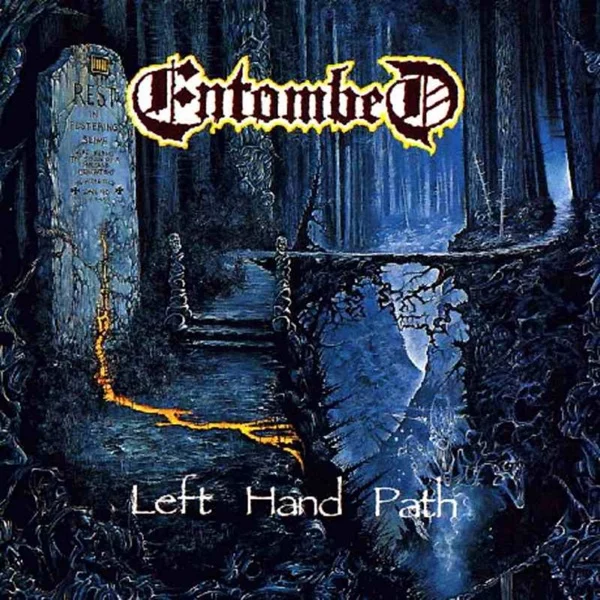
The original release was later expanded with a second disc, Averno, in a reissue, a sign the label wanted to bulk up the package rather than let the studio album stand alone. This commercial gesture doesn’t diminish the main record’s cohesion, but it confirms the impression of an Entombed seeking to consolidate its identity rather than shake it up. This is far from the flashes of Left Hand Path or the drive of Wolverine Blues, and it’s precisely this comparison, inevitable for a band so marked by its own past, that works against Inferno.
Ultimately, Inferno is an honest album, solidly played, that never betrays the band’s sonic identity but doesn’t seek to transcend it either. Fans of Swedish death’n’roll will find what they’re looking for, carried by brawny riffs and flawless technical execution. But for those expecting a creative jolt or a willingness to take risks, disappointment awaits: the album goes down smoothly enough, but without great surprise, like a veteran replaying his classics with craft rather than urgency.