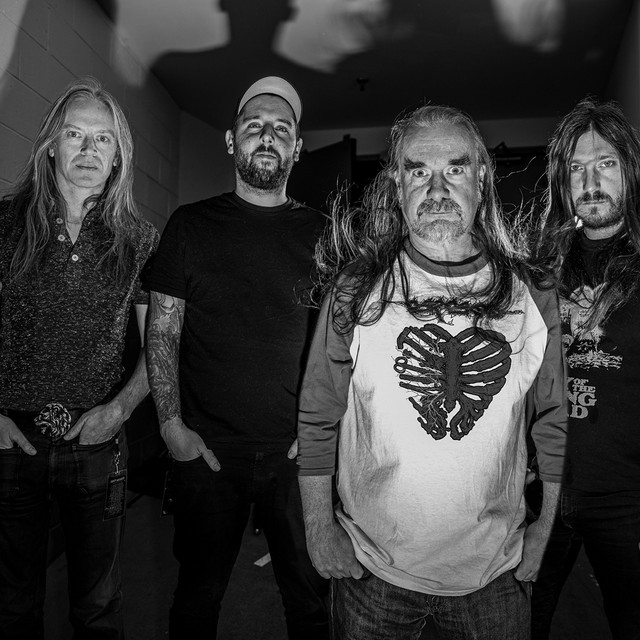
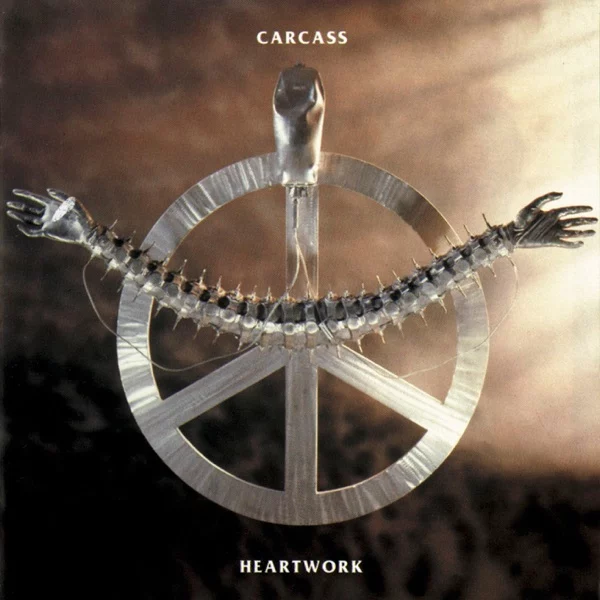
There’s something almost ironic about Carcass, a band that built its legend on dissected anatomy and surgical vocabulary, returning with an album whose title literally designates torn vessels. After the comeback orchestrated by Surgical Steel, the Liverpool trio could have simply played the same card again. Torn Arteries instead chooses to broaden the scope, never betraying the melodic DNA that has defined the band since Heartwork.
Under the Scalpel Blade
From the first tracks, Jeff Walker’s bass hits with that cavernous hardness that’s uniquely his, while Bill Steer’s guitars unroll twisted harmonies, almost hard rock at times, as on the track that gives the album its title. The vocals remain that grave, articulate bark, never completely bestial, always intelligible in their verbal cruelty. We find that taste for lengthy titles and clinical vocabulary that became the band’s trademark, but the music itself allows for unexpected detours: a few almost bluesy solos, a willingness to let structures breathe rather than barrel ahead full steam.
Daniel Wilding’s Assault
The drummer asserts a more pronounced presence here than on the previous record, with breaks that interrupt the straight line without ever falling into gratuitous display. On tracks like Dance of Ixtab or Eleanor Rigor Mortis (the macabre wordplay remains a constant), the accelerations and slowdowns are delivered with a sense of timing that gives the album a breathing quality that Surgical Steel, more frontal in approach, didn’t always have. The production, signed in that organic and slightly grimy vein that Carcass has always favored, avoids the trap of too-polished sound: the guitars have grain, the bass bites, and the whole thing sounds like a band playing together rather than a collection of carefully layered studio tracks.
When Melody Takes Over
This is probably where Torn Arteries stands out most: melody is no longer simply an ornament placed over brutality, it sometimes becomes the driving force of the track itself. Certain passages frankly lean toward the British hard rock harmonies of the seventies, a choice that could have sounded like betrayal from a less assured band, but here it comes across as inevitable given how coherent the writing remains with the band’s legacy. You sense musicians who no longer feel the need to prove anything, only to make their riffs sound as good as possible.
The album isn’t without its slow stretches, some mid-album tracks drag on without always justifying their length, and the album as a whole perhaps lacks a title as immediately striking as the best moments from Heartwork. But Torn Arteries confirms that Carcass, far from resting on its pioneer status, continues to write with real ambition. A veteran album that still knows where to strike, without needing to shout louder than everyone else to be heard.