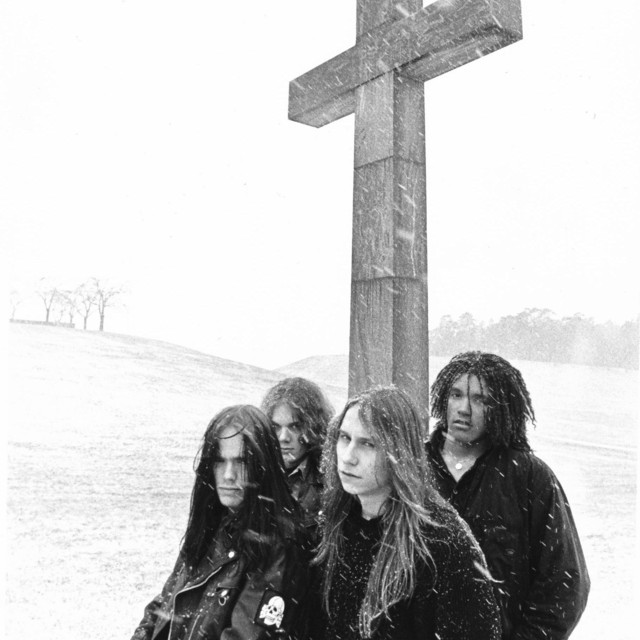
When this debut landed on Earache in 1990, Sweden had no globally recognized extreme scene to speak of. Entombed, risen from the ashes of the band Nihilist, overturned that situation with a single record. Cut at Sunlight Studio in Stockholm under Tomas Skogsberg, Left Hand Path more or less invented the sonic grammar of Swedish death metal, a texture you recognize within a second and that countless bands would later try to reproduce.
The Sunlight sound
It all begins with the guitar. That notorious tone, wrung out of a Boss HM-2 pedal cranked into the red, produces a chainsaw grind soaked in low end: thick, filthy, almost organic. This was never a studio novelty. It became a signature that shaped a whole school, from early nineties Stockholm to present day bands who still proudly claim that unmistakable timbre as their own.
Nicke Andersson, barely out of his teens, plays with an inventiveness that goes well beyond the simple blast beat, varying his accents and breaks. The riffs of Uffe Cederlund and Alex Hellid swing between crawling weight and biting acceleration, while Lars-Goran Petrov’s cavernous growl anchors the whole in a darkness that is still youthful yet already fully assured.
Songs built like structures
The title track, opening the album across nearly seven minutes, is a masterclass in construction: a creeping intro, an unstoppable central riff, rising tension and a closing instrumental nod that captures the spirit of the emerging genre. The length is never gratuitous, it serves a progression that grips the listener from start to finish without ever sagging.
Elsewhere, Drowned, Supposed to Rot and Revel in Flesh show a band equally at home with brutal concision and more atmospheric development. The production is raw yet surprisingly legible, letting each instrument breathe without ever sanding down the rough edges. It sounds dangerous, menacing, without ever collapsing into formless noise or mere displays of force.
A lasting legacy
Left Hand Path is not merely a great first album, it is a genuine cornerstone. Swedish death metal owes a good part of its identity to it, and whole generations of musicians have tried to recover that precise guitar grain, right down to today’s hardcore and crust scenes that openly claim its lineage.
Entombed would later drift toward death’n’roll, a rockier, groovier turn that split the fanbase, but this record remains the definitive statement of their most extreme era, the one where everything was still possible and nothing was fixed.
Three decades on, the listen has lost none of its power or its freshness. This is a classic in the strictest sense: an object that redefined the rules of the game and against which we still measure the countless records it made possible. A near flawless achievement that fully earns its place at the very summit of the genre.