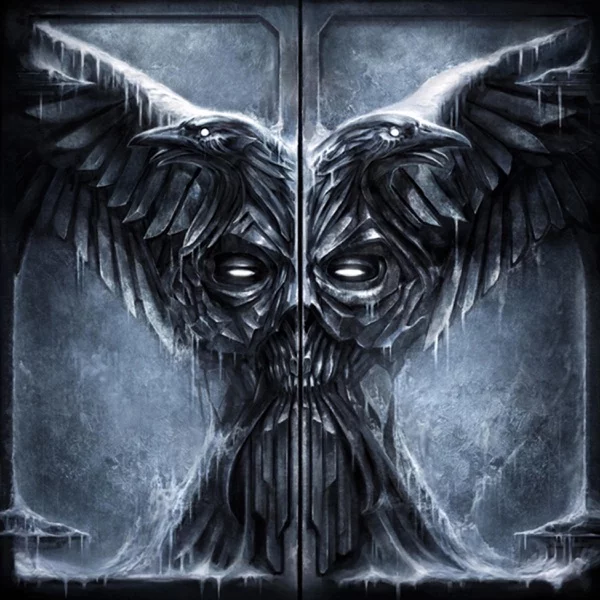
There’s something strangely mournful about listening to Instinctus Bestialis today, knowing that bassist Bøddel would disappear just months after its release, taken by illness. Yet the album is hardly a requiem: this is a Gorgoroth record, designed to hit hard and provoke, carried by the fresh voice of Atterigner making his debut at the group’s microphone. The cover, borrowed from a painting depicting Christ in Limbo, sets the tone for a work that continues to draw from religious imagery only to turn it against itself.
A voice searching for its place
Atterigner lacks the theatrical madness of his predecessors, and that may be this album’s central problem. His singing is effective, technical, but lacks that aura of danger that defined the group’s greatest moments. On tracks like the opener or the fastest passages, he manages a fairly conventional rage, a saturated growl that does the job without ever truly making an impression. You sense an diligent singer, perhaps too restrained for a band that built its legend on excess.
Infernus on autopilot
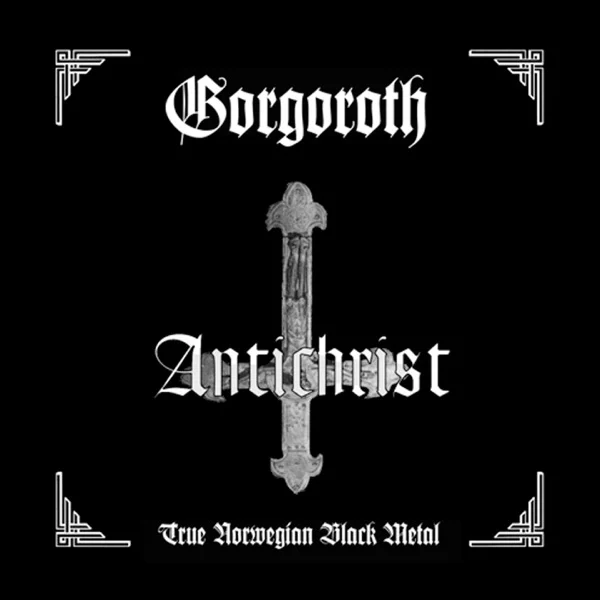
The guitarist remains the true captain of the ship, and his riffs still betray that mastery of icy tremolo that made the riffs on Antichrist and Under the Sign of Hell. But here, the songwriting sometimes goes in circles: structures follow one another without much surprise, mid-tempos sound like obligatory passages rather than genuine breathers. A few flashes break through, notably accelerations where the drums pound relentlessly and the guitar finds a more organic sharpness, but the whole thing suffers from production that’s too polished, smoothing out the rough edges that made Norwegian black metal’s dirty charm so appealing originally.
The weight of the past
It’s hard not to compare this album to the overwhelming legacy Gorgoroth drags behind it. The band set such striking benchmarks in the 1990s that every new release inevitably gets measured against that standard, often unfairly. Instinctus Bestialis doesn’t aim to reinvent the formula: it’s a workmanlike record, solid in execution, checking all the expected boxes (sharp riffs, efficient blasts, hostile atmosphere) without ever truly surprising or unsettling. You sense a band that plays well, that knows its craft, but struggles to recapture the visceral urgency of their early days.
What remains is an honest record, technically flawless, but one that gets listened to with a certain distance rather than with the stiff neck that the group’s great albums demanded. The tragic context surrounding it, with the bassist’s death shortly after its release, gives it a posthumous emotional weight that the music itself can’t entirely convey. Instinctus Bestialis isn’t a bad Gorgoroth record, it’s simply one that lacks the visceral darkness that made the name famous. For die-hard fans, it will find its place in the discography as a chapter of transition rather than a cornerstone. For others, there’s plenty more to explore elsewhere in the band’s catalog before landing here.