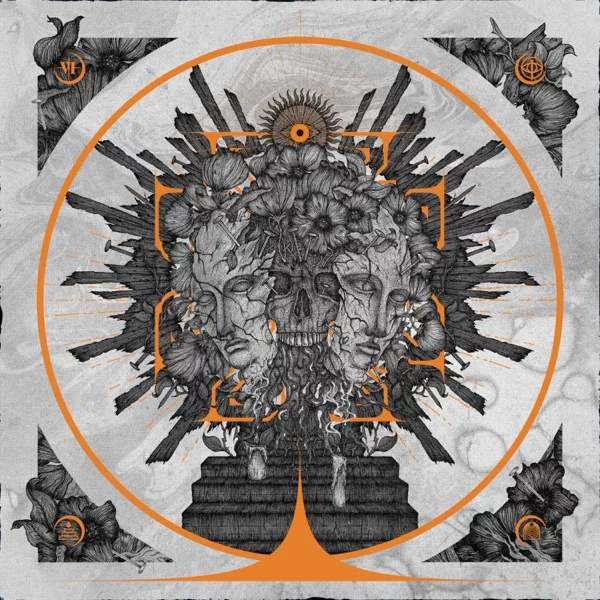
The second album by England’s Bury Tomorrow, The Union of Crowns landed in 2012 as the confirmation of a Southampton outfit determined to make its mark on European melodic metalcore. The title nods to the early seventeenth-century union of the English and Scottish crowns, a historical thread that runs through the record’s imagery without ever weighing it down. From the opening bars the band lays out its method: cutting riffs, sturdy breakdowns, and above all the dual-vocal approach that has become its signature.
Two voices, one target
The whole dynamic rests on the exchange between Dani Winter-Bates’s screamed delivery and Jason Cameron’s clean choruses. One bites, the other brightens, and the alternation gives the album instant readability. It is a proven formula, inherited from an entire generation of metalcore, yet Bury Tomorrow executes it with a conviction and cleanliness that forgive the relative lack of surprise. The vocal hooks catch fast, sometimes a touch too politely.
A muscular production
The sound is massive, modern, built for big rooms: thick guitars, crisp drums, a bass that is present without crowding. That clarity serves the songs, even if it occasionally sands off the grit that would have made certain passages more dangerous. Verses accelerate, bridges breathe, breakdowns drop at the right moment. You sense a band that has mastered its grammar and chases efficiency before experimentation, at the cost of staying inside a well-marked frame.
The limits of comfort
The main complaint is a certain uniformity: several tracks follow a comparable arc, aggressive verse then luminous chorus, and the album would gain from varying its ruptures more. Nothing is a dealbreaker, since the energy never truly flags, but the demanding listener waits for a risk that arrives only halfway. The strongest cuts prove, though, that the group can tighten its writing when it dares.
In the end, The Union of Crowns is a robust and sincere record, an important milestone in Bury Tomorrow’s rise. It does not reinvent melodic metalcore, but it defends the style with real assurance and lays the groundwork for a career that would later take on a more personal dimension. For anyone who loves rallying choruses and well-planted riffs, it is a safe, honest and generous bet.