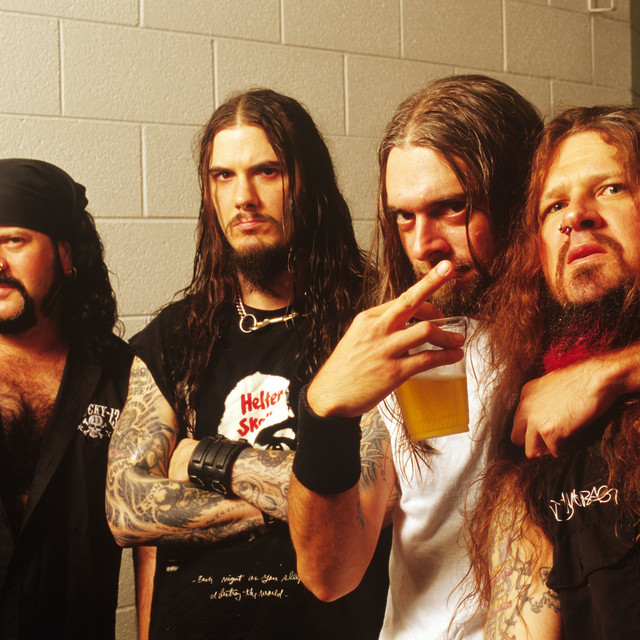
There’s something fundamentally broken about The Great Southern Trendkill, and that’s precisely what makes it so fascinating. The separate recording of the vocalist and the rest of the band, far from being a trivial detail, can be heard in every corner of this record: a voice that seems to scream from another world, music that circles back on itself with an almost clinical rage. The opening title track, with its riff that stretches and contracts like a muscle under tension, immediately sets the tone for an album that doesn’t seek coherence but controlled implosion.
A voice from elsewhere
The vocalist delivers a vocal performance here that oscillates between menacing whispers and tearing shrieks, sometimes within the same phrase. On « Suicide Note Pt. I », his voice becomes almost fragile, carried by an acoustic guitar that radically contrasts with the band’s usual brutality, before the second part comes along to shatter everything in a torrent of pure rage. This duality, this permanent extreme contrast between vulnerability and violence, structures the entire album and gives it a psychological tension rarely achieved in the genre.
Deconstructed groove
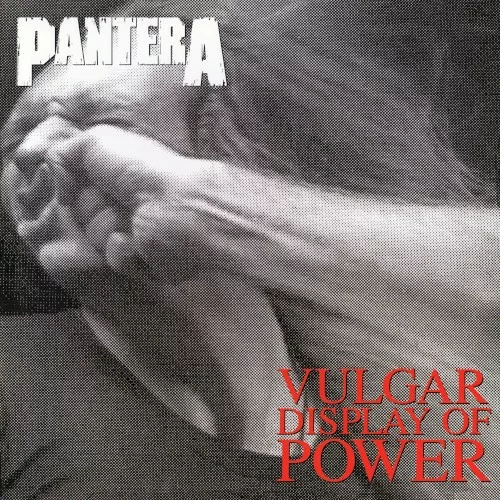
The guitarist, meanwhile, seems to be having fun dismantling the groove metal he helped shape. The riffs of « War Nerve » or « Floods » no longer seek the straight and martial line of Vulgar Display of Power, but instead explore more twisted structures, sometimes almost progressive, with breaks that shatter the rhythm when you least expect it. « Floods » in particular unfolds an unusual scope, with an instrumental passage that lets the tension breathe before making it explode again. The production helmed by Terry Date, the band’s last collaboration of this kind, captures this roughness with a dry and abrasive sound, less polished than on previous records, as if the internal chaos had finally seeped into the mix.
What strikes you on repeated listens is the complete absence of a filter. The fastest tracks, like « Drag the Waters » or « 10’s », charge forward with an almost punk-like venom, without the slightest melodic concession, while others stretch into heavy, filthy mid-tempos that weigh like lead. The band is no longer trying to please, no longer trying to reproduce a formula that worked: they’re spitting out what’s in their heart, literally, and this raw sincerity, even when it’s awkward or unbalanced, gives the record an authenticity that few albums of the decade can claim.
Is it a perfect album? No. There are stretches, tracks that struggle to stand out in the second half, a coherence that inevitably wavers when the musicians weren’t even in the same room. But it’s precisely this imperfection, this assumed imbalance, that gives The Great Southern Trendkill its strength. It’s the sound of a band on the verge of collapse, transforming its own disintegration into artistic raw material. Few metal albums of the 1990s manage to capture such palpable distress while remaining so viscerally effective. A sick record, in the noblest sense of the term.