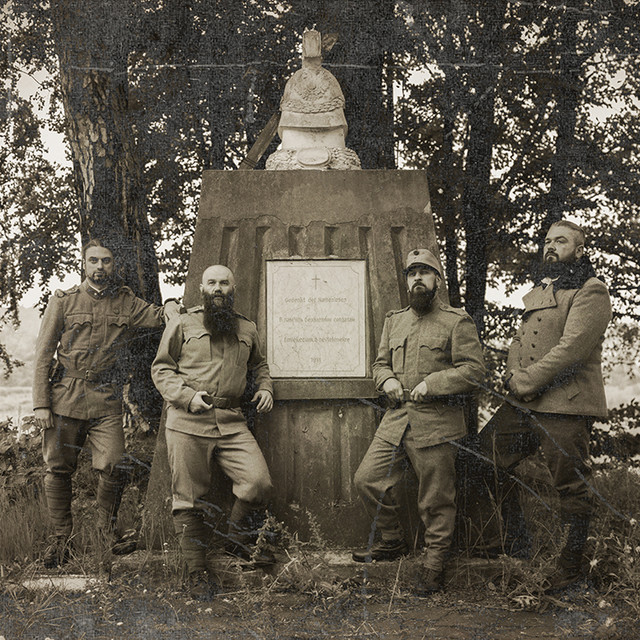
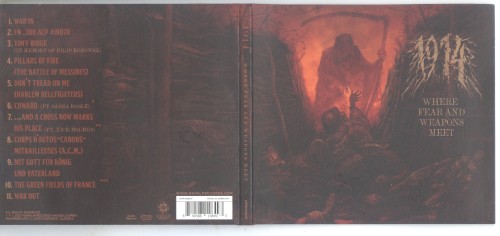
There is something chilling about the way 1914 opens this record: before even the first riff, you already hear the past speak. The Ukrainian band built its reputation on a simple but rarely exploited principle with such rigor: making metal a tool of memory rather than a mere outlet. Released on November 11, the anniversary of the armistice, The Blind Leading the Blind is not a concept album vaguely inspired by war, it is a constructed, documented plunge into the mud of the trenches of 1914-1918.
Voices from Beyond the Grave
The record opens and closes with period sound fragments, extracted from films and archive recordings, inserted between tracks or within the compositions themselves. Far from being an atmospheric gimmick, these interludes function as funeral breaths: they constantly bring the listener back to the historical reality behind the noise. When the music resumes after these silences filled with crackling voices, the impact is doubled. The band has the intelligence to never transform war into gratuitous aesthetic fantasy; instead, it seeks, through the riffs, a form of damaged humanity.
Between Heaviness and Detonation
Musically, 1914 maintains a precise balance between suffocating death-doom and faster detours, almost black metal, that evoke the chaos of assaults. The riffs are often massive, built on slow tempos that distill muted tension, before the drums abruptly accelerate to simulate the urgency of combat. The vocals, guttural and hoarse, act as a voice from the depths of the trenches rather than a technical performance: it tells, it moans, it screams. The production, thick but never muddled, leaves room for these period sound atmospheres without ever drowning them in guitar saturation.
The Weight of Silence
What strikes most is the band’s ability to alternate crushing passages with more restrained, almost ceremonial moments, where silence and lugubrious textures take over. These breaths give the record an almost cinematic dimension, far from the logic of chained riffs found in many more formatted death or black productions. You feel a real desire to tell a story, not just stack effective tracks. This approach requires investment from the listener, but it is amply rewarded by the coherence and gravity of the whole.
The Blind Leading the Blind stands out as a rare work in the extreme metal landscape: an album that uses the heaviness and blackness of the genre not for the aesthetics of destruction, but to question memory and the absurdity of the conflict. 1914 succeeds here in a perilous exercise, giving historical and almost pedagogical meaning to a music often confined to pure nihilism, without ever sacrificing the intensity and blackness that give the genre its strength. It is a record that weighs, that haunts, and that deserves to be heard in its entirety, headphones on, to fully feel its weight.