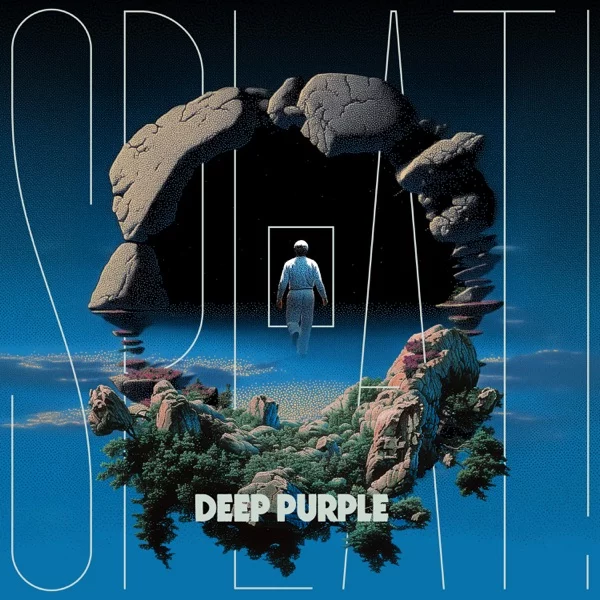
It’s hard to imagine Deep Purple still having the ability to surprise after so many years on the road, and yet =1 arrives with an energy that stands out from the polite lethargy of some previous records. The arrival of guitarist Simon McBride, who replaced Steve Morse, changes everything: his playing is rawer, more instinctive, less academic than his predecessor’s. You can feel a band that has rediscovered a sense of combativeness, driven by a production signed by Bob Ezrin, who’s been at the helm since Now What?!, and who knows how to balance Jon Lord’s organ legacy and the guitars without ever falling into dated nostalgia.
The concept of one
The idea running through the album, this notion that everything eventually boils down to a common unity in a world that’s become too complex, remains diffuse but gives thematic cohesion to the whole. It’s not a concept album in the strict sense, more of a red thread that lets the songs breathe without seeming disparate. Opening tracks like Show Me and Portable Door play this card with sharp riffs and a rhythm section that moves forward without dragging, far from the sluggishness sometimes held against the band on previous productions.
The voice reclaimed
The real talking point here is Ian Gillan’s singing. More measured, warmer than on several recent records, he finds a register where he no longer needs to strain in the upper register to convince. On tracks like Lazy Sod or I’m Saying Nothin’, he works the phrasing, the breathing, a kind of mischief that reminds you the man still knows how to tell a song rather than simply sing it. This vocal maturity changes the perception of the whole record: even the less striking passages gain texture thanks to this presence.
The riff that bites
On guitar, McBride isn’t trying to copy anyone. His playing is tighter, more rock, with solos that favour melody over pure technical display. On Sharing God’s Love, the main riff has real bite, almost garage-like in its economy, and it’s precisely this restraint that works: you can feel a band no longer trying to prove anything, just playing it straight. The organ parts remain present but in the background, like a nod rather than a central pillar, which gives the album a more guitar-driven colour than some records from the Morse era.
=1 reinvents nothing, and that’s clearly not its ambition. But the record stands on its own with real freshness, carried by a line-up that seems to be having fun rather than fulfilling a contract. There are some dips in form, a few more formulaic tracks that struggle to stand out, but overall it radiates a vitality you didn’t necessarily expect at this stage of the band’s career. For longtime followers of Deep Purple, it’s an honest, sincere success that deserves more than a distracted listen.