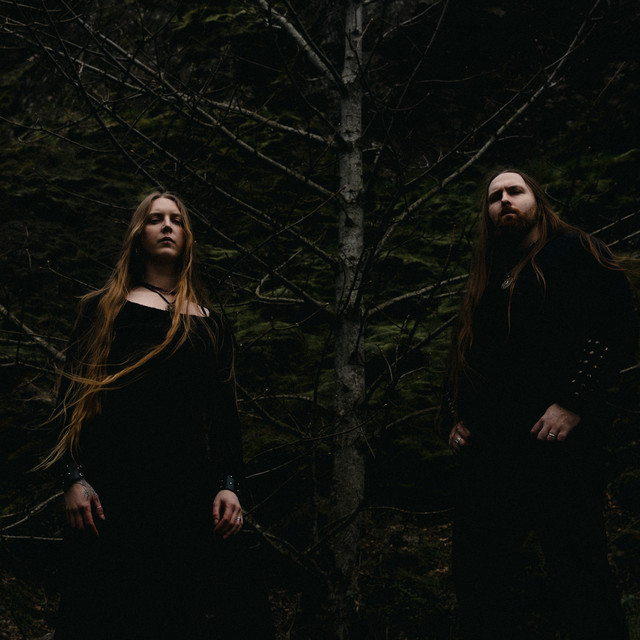
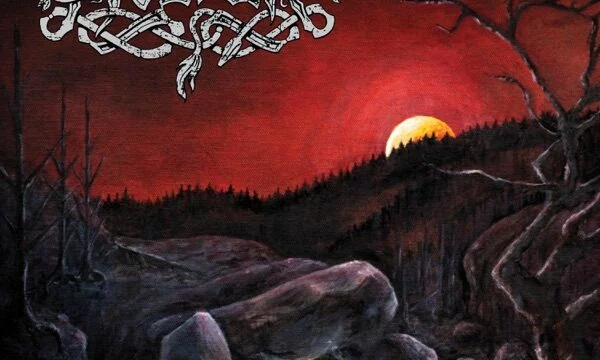
Following the warm welcome given to Godslastering: Hymns of a Forlorn Peasantry, Hulder returns with Verses In Oath, an album that makes no attempt to deny the medieval and gritty heritage that made its reputation. We find that same tension between the rawness of the most crude black metal and melodic lines that seem to have escaped from an illuminated manuscript. The production remains deliberately dirty, guitars screech and crackle like metal being scraped, but behind this veil of noise hide riff architectures far more crafted than they appear at first glance.
Bells in the Storm
What strikes immediately is the use of melodies in false doubles, these guitar lines that intertwine like two voices in a corrupted Gregorian chant. We sometimes think of a funeral fanfare played by drunk monks, so much does the album alternate between solemnity and chaos. The vocals, piercing and harrowing, hover above the rhythm without ever truly anchoring to it, as if coming from another temporal space than the music itself. This intentional desynchronization creates permanent unease, a sensation of always being slightly out of sync with what you’re hearing.
The Battle of Silences
The slower passages of the album are perhaps the most interesting. Far from the usual blast beat fury, certain sections stretch into arpeggios almost acoustic in texture, before the drums come crashing back to shatter this calm. This interplay between tension and explosion recalls the best moments of Scandinavian atmospheric black metal, but with a more handcrafted patina, almost domestic. You sense that each riff was conceived as a fragment of narrative, a stone laid in a larger story about war and oath, without the album needing an overly written concept to function.
Wear as Aesthetic
The main flaw of Verses In Oath might be this familiarity with the previous album: we recognize the signature, the codes, the melodic finds that had already marked Godslastering. Nothing here truly surprises those already familiar with the project, and certain tracks in the album’s middle struggle to distinguish themselves from one another, drowned in a production that favors atmosphere over clarity. We would have appreciated more risk-taking, a more pronounced breathing space in the song structures, rather than a succession of patterns that are certainly effective but sometimes redundant.
Nevertheless, Verses In Oath remains an album that stands on its own two feet, carried by genuine sonic identity and certain mastery of the black folklore it conjures. It’s not the kind of album that overturns black metal codes, but rather one that honors them with sincerity and an acute sense of melodic detail. Genre enthusiasts will find plenty to satisfy themselves with, even if the impression of repetition will temper the enthusiasm of the most demanding listeners. A solid milestone, without being the album that will mark a turning point in Hulder’s trajectory.