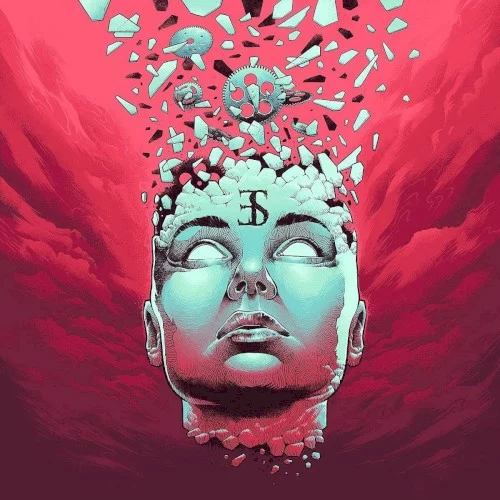
Released in 2008, Lost in the Sound of Separation sees Underoath take a darker, harsher turn. After a previous album praised for its ambition, the Florida band toughens its tone and tightens its message, partly setting aside the melodic hook of its early days in favor of a rawer intensity. The result is a demanding, tormented and deeply inhabited record.
A heavier turn
Gone is the immediate melodic metalcore: here the band favors dissonance, tortured structures and an oppressive atmosphere. The guitars grow more abrasive, the rhythms more complex, and the whole gives off an owned darkness. This hardening marks the will of a band that refuses to repeat itself, even at the cost of unsettling part of an audience used to more luminous choruses.
The Chamberlain-Gillespie tension
The vocal dialogue between Spencer Chamberlain and Aaron Gillespie remains at the heart of the setup, but it gains in tension and despair. The screams are more enraged, the clean singing more fragile, as if on the verge of breaking. This duality, pushed to the extreme, conveys an inner unease that runs through the whole record and gives it a particularly intense emotional charge.
A coherent work
Far from lining up tracks calibrated for the airwaves, Lost in the Sound of Separation is conceived as a whole, a plunge into doubt and fracture. The atmospheric breathing spaces and the swells of power follow one another with relentless logic, serving an introspective and uncompromising message. The record demands attention but amply rewards the listener’s patience.
In the end, this record stands as one of Underoath’s artistic peaks, the one where the band fully owns its ambition and its darkness. Less immediate than its earlier works, it gains in depth what it loses in accessibility. For anyone seeking an intense, tormented and sincere post-hardcore, it makes a striking listen, rich and lasting.