There are compilations that feel like dusty inventories, and then there are others that hit like a standalone record. Behind This Wall: 1988-1991 clearly belongs to the second category. This collection offers no previously unreleased material in the strict sense: it gathers the material recorded by Turning Point during its brief active existence, defined by the title itself. But listened to from start to finish, the object takes on an almost organic coherence, as if the band had composed an album without ever having had the formal opportunity. You quickly forget it’s a retrospective assembly, so much does the tracklist seem conceived as a unified whole.
Youth crew with doubts
What strikes you immediately is how the band subverts the codes of New Jersey youth crew without ever openly rejecting them. The riffs remain robust, the tempos brisk, the rhythm section dry and square as the genre demands. But the voice never shouts certainties: it questions, it wavers, it stretches over sustained notes that have nothing to do with the usual rallying cries. You sense songwriting that seeks something beyond the simple evacuation of rage, something more intimate, almost confessional, something that was just waiting to be named later by an entire scene that came after Turning Point.
It’s Always Darkest, cornerstone
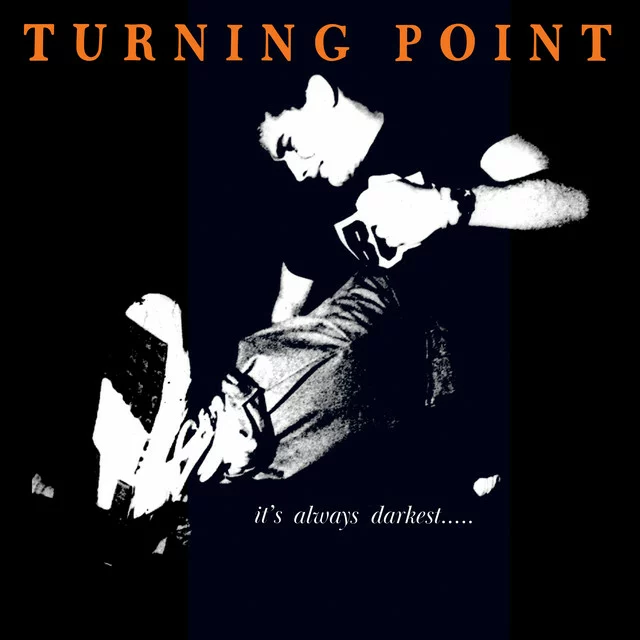
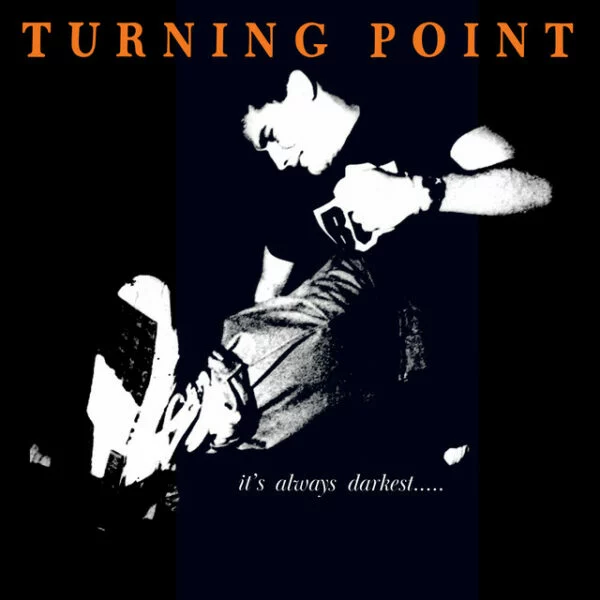
The tracks from It’s Always Darkest… Before the Dawn form the hard core of this retrospective, and they haven’t aged a day. The production remains raw, typical of the era, but it paradoxically serves the purpose well: this slightly dirty grain gives weight to the accelerations and lets the more melodic moments breathe, those where the guitar drops the power chord for an almost melancholic line. You can hear distinctly the seeds of what emo hardcore would later develop, without Turning Point ever needing to theorize it. It’s a band that acted before knowing it was opening a path, driven by genuine urgency rather than aesthetic calculation.
Scattered tracks finally brought together
The choice to gather these dispersed recordings in a single gesture also allows you to measure the coherence of songwriting that, at the time, may have seemed scattered across different formats. Here, the tracks answer each other, the damaged voice and rhythmic pushes dialogue from one song to the next as if they’d always been conceived together. You perceive a constant tension between the urgency of the genre and a desire for nuance that wasn’t so common in this scene in the late 1980s. The band never seeks the easy effect: no gratuitous breakdowns, no speed escalation to impress the crowd. Each acceleration seems justified by the lyrics, by a precise emotional tension rather than by a genre reflex.
Obviously, the exercise has its limitations: we’re dealing with an archive document, with the sonic constraints inherent to this type of project, and certain passages clearly betray their DIY fabrication. But it’s precisely this assumed fragility that makes the whole thing endearing rather than dated. Behind This Wall: 1988-1991 doesn’t try to artificially modernize the sound of the era, and that’s entirely to its credit: you hear a band that was tinkering with its means to create music ahead of its time, without ever claiming so. For anyone interested in the roots of emo hardcore, this record is almost essential listening, a foundational stone you rediscover with growing respect with each listen.