Released in 1982, Hear Nothing See Nothing Say Nothing is Discharge’s first studio album and one of the most influential records ever to come out of punk. Formed in Stoke on Trent in the late 1970s and already noticed for its devastating EPs, the band perfected here a formula of unheard of radicalism: a continuous wall of noise, hammered by a drum pattern so distinctive it would give its name to an entire genre, the D-beat. Far from any melody, the album aims for pure, brutal, utterly uncompromising impact.
The invention of the D-beat
The heart of the record lies in that obsessive, taut, repetitive pulse, over which saturated riffs and Cal’s cavernous roar are grafted. Tracks like « Protest and Survive » and the title song advance like steamrollers, refusing all ornament in favor of a constant, suffocating intensity.
This minimal, almost mechanical approach turns punk into a nearly physical experience. The music becomes a discharge of raw energy, monolithic and coherent from start to finish, where repetition works as ideological hammering.
A scream against war
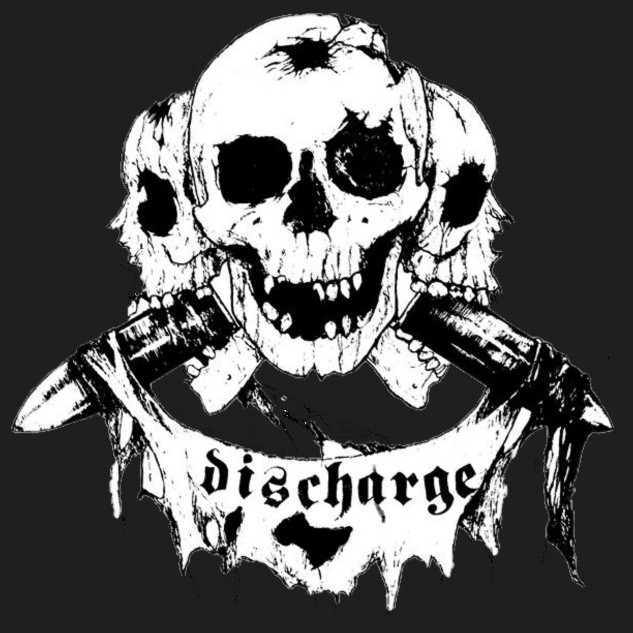
The lyrics, boiled down to terse slogans, denounce war, nuclear dread and the state violence that haunted early 1980s Europe at the height of Cold War tension. The band’s stark, head on artwork and imagery extend that message without detour.
This is not nuanced discourse but a shock meant to wake people up and shake them. Discharge’s furious pacifism works through the very brutality of the form: telling the horror of war by making you hear it.
A blueprint for extreme metal
The influence of this album reaches far beyond punk. Discharge’s D-beat would feed crust, grindcore and a whole swath of extreme metal, and many thrash and death metal musicians would openly cite the band as a major reference in their formation.
By laying the groundwork for a heavier, faster, more abrasive sound, Hear Nothing See Nothing Say Nothing acts as a bridge between hardcore punk and the most extreme music that would follow, to the point of making « D-beat » a label in its own right.
Four decades later, the album keeps an undiminished power and an unsettling relevance, at a time when the threats it denounced have not gone away. Harsh, repetitive and implacable, it does not seek to please but to strike. For anyone wanting to grasp where whole stretches of extreme music come from, this record remains a mandatory stop and a genuine lesson in radicalism.