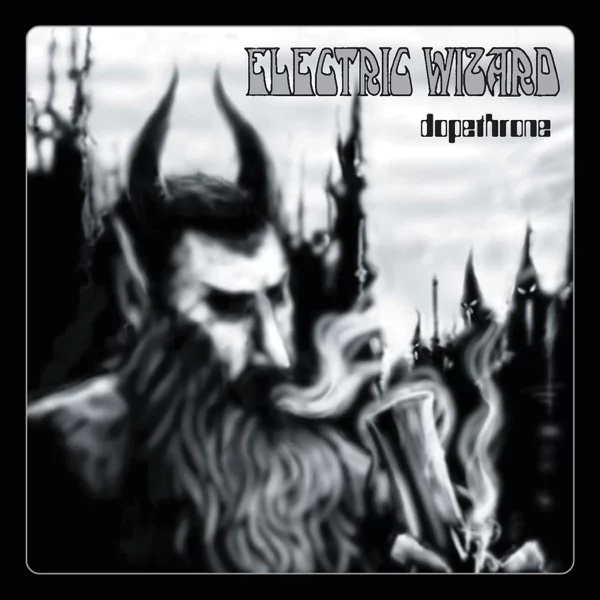
Electric Wizard has spent its entire career digging the same dark groove, one of fuzz-saturated doom and references to the horror of vintage drive-in theaters. With Wizard Bloody Wizard, the band returns after Time To Die with a tighter, shorter record, barely a handful of tracks. This compact format already changes things: gone are the sprawling hypnotic marathons in the vein of Dopethrone, replaced by more direct structures, almost anxious in their urgency.
A drier riff, less drowned out
From the opening bars, you can feel the sound has shifted. The guitar keeps its grimy texture but it breathes more freely, the riffs are less buried in reverb, sharper, with something eyeing the gritty hard rock of the seventies rather than the band’s usual sepulchral wall. The singer’s voice remains that drawling, drugged-out wail, but it stands out better from the instrumental magma, as if the production, shared between him and the guitarist, had sought to open up the formula a bit without denying the underlying heaviness. The result surprises those expecting another monolith in the vein of Witchcult Today: here, we’re more in the realm of exploitation horror film artwork, with structures that move in jerks rather than slow flow.
When groove replaces crushing weight
What strikes most is the groove. Certain passages eye a more visceral rock, almost danceable in its gritty way, far from the deliberately suffocating inertia of the beginning. The rhythm section keeps its weight but it hits with more precision, less in strangulation than in repeated impact. You could see it as a taming, an almost hard rock concession to a style that has always claimed excess and slowness as weapons. Yet the atmosphere remains vicious, still soaked in that occult and cannabis imagery that clings to the band’s skin forever, that sensation of degraded horror film looping endlessly in a forgotten basement.
A cover that says it all
The cover photograph, signed by the guitarist, captures the album’s spirit well: something sickly, deliberately cheap and grating, directly linked to the band’s obsession with B-movie horror. Musically, this same tension between assumed grittiness and desire to tighten the message runs through the entire album. You sense a band no longer trying to dig deeper into the same hole, but attempting to widen its playing field without ever betraying its darkest instincts. The transitions between tracks become drier, almost abrupt, as if each song had to justify its presence without dragging things out.
The verdict is mixed. Wizard Bloody Wizard has neither the definitive crushing force of Dopethrone nor the hypnotic thickness of Come My Fanatics, and some band fans can legitimately regret this shift toward more straightforward structures. But taken for what it is, a record by veterans who refuse to simply remake the previous album, it works well, driven by more nervous energy and a production that finally lets the guitars breathe. It’s not the peak of their discography, but it’s an intentional turn that deserves a listen, even if you close the album with the feeling that the format is a bit too condensed to really leave a lasting mark. What remains is the sensation of a band that prefers taking risks over comfortably sinking into its own legend.