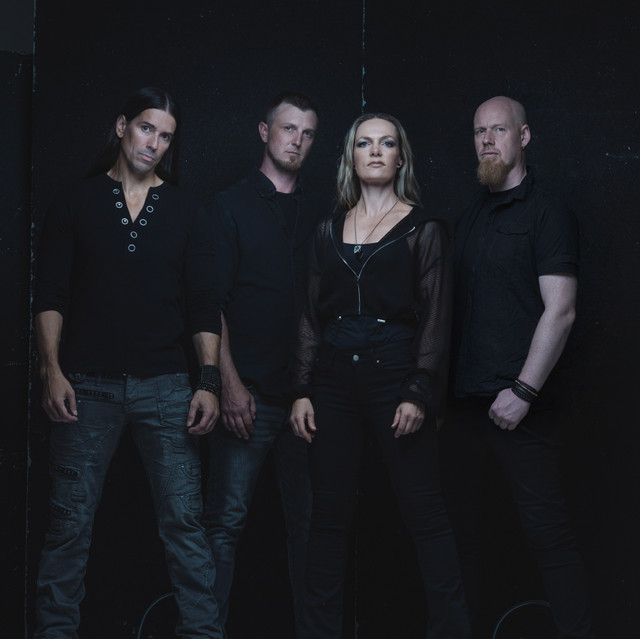
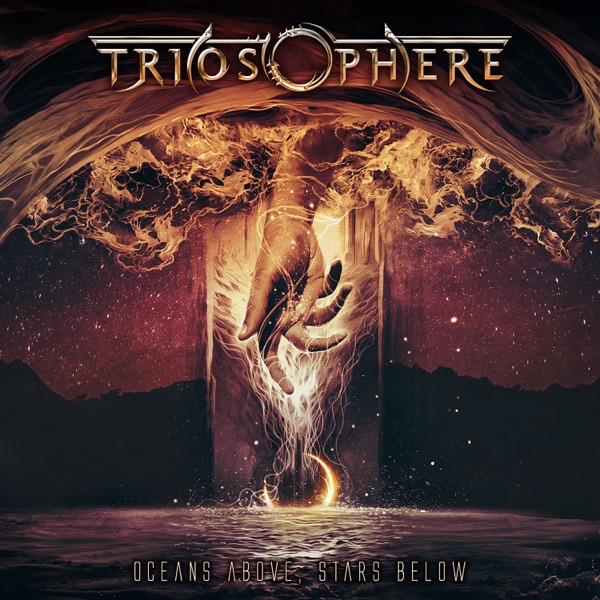
With The Road Less Travelled, Triosphere closes one chapter and opens another. After a debut album forged in rawer urgency, the Trondheim group welcomes a new guitarist, Tor Ole Byberg, and officially becomes a four-piece. This lineup change is far from trivial: it shapes the entire record with a more refined architecture, where guitars answer each other, double up, and build melodic arches rather than simple walls of riffs. You sense a band seeking to sharpen its writing without abandoning its heavy foundation.
A four-piece that changes the game
What strikes you first is how the guitar dialogues with Ida Haukland’s voice. It remains the central element, with that expansive timbre capable of reaching high notes without ever sounding shrill, but it’s no longer alone in carrying the melody. Lead guitar parts now punctuate the choruses, sometimes anticipate them, and this gives the songs a breathing space the previous record didn’t always have. The rhythm section, meanwhile, keeps that dry heavy metal grain, with double-bass drums that crack without ever sliding into gratuitous display.
More melodic, less direct
The press sheet states it clearly, and listening confirms it: the sound moves away from Onwards’ more straightforward approach toward something more vocal-driven, built around the vocal line. Choruses are crafted to stick in your head, verses leave room for arrangements, and the whole thing takes on an almost symphonic dimension at times, yet never strays into grandiosity. This is a record that favors clear lines over accumulation, gaining clarity at the cost of occasionally losing bite.
Echoes, the unexpected breathing space
The most singular choice on the record remains this entirely acoustic interlude, carried by piano and cello, which reprises the themes of the surrounding tracks as a medley. Far from being simple filler, it functions as a mirror: the main melodies are stripped of all distortion, revealing just how solid Triosphere’s writing stands without electric power. It’s a risky move on a metal record, but it works because it doesn’t seek to impress, just to let you hear differently what’s already been built.
What The Road Less Travelled sometimes lacks is equivalent risk-taking on the rhythmic or sonic front: the record moves forward with confidence, but without truly surprising once the formula is established, and some mid-tracklist songs struggle to distinguish themselves from one another. Still, the whole thing holds together through writing quality and a voice that commands authority without ever overplaying its hand. A transition record that owns what it is, clearly laying groundwork for what comes next without betraying the band’s identity. A solid step forward, carried by obvious growth in collective maturity.