By 1995, no one expected much from Saint Vitus anymore. The band had been languishing for years in general indifference, tossed between vocalist changes and public apathy, far from the dominant trends of the era. And yet, Die Healing emerges as a singular piece in the band’s discography: it marks the return of the original line-up, the one before Wino, the one that had laid the group’s foundations in the late seventies. An almost testamentary gesture, since this record would be the last before the band’s dissolution the following year.
The Return of Scott Reagers
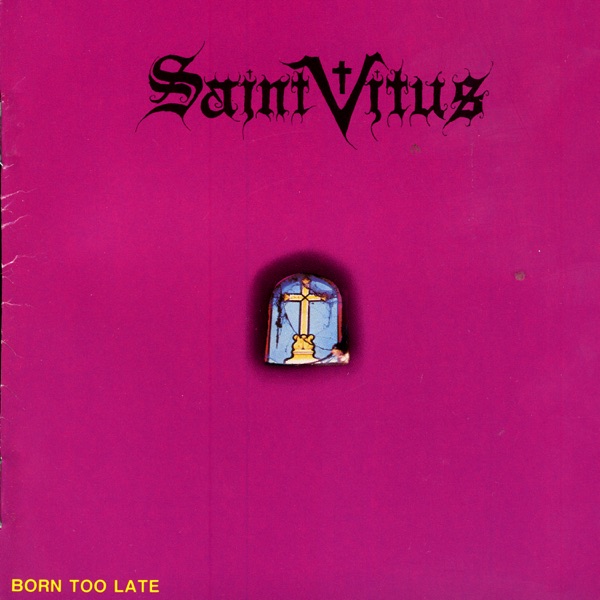
Scott Reagers’ voice has nothing to do with Wino’s bluesy grain and power. It is rawer, more tense, almost tormented, and it clings perfectly to the album’s funereal atmosphere. Over drawn-out tracks, the vocal line never seeks effect: it crawls above the riffs, weary, as if resigned. This aesthetic choice gives Die Healing a different color than Born Too Late, perhaps less charismatic, but harsher, closer to the muted despair that has always inhabited Dave Chandler’s sound.
Chandler’s Guitar, Forever Filthy
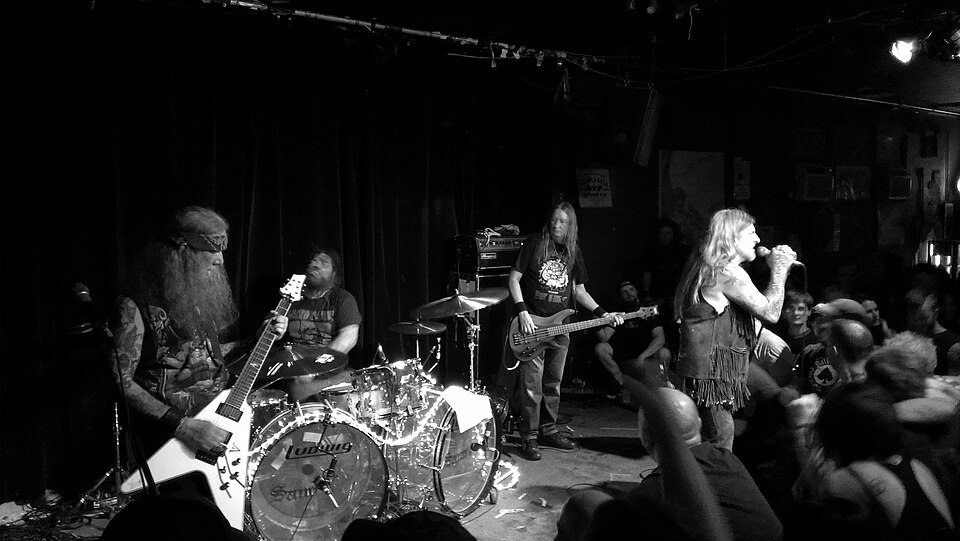
The true center of gravity of the record remains Dave Chandler’s playing, instantly recognizable: heavy riffs, slightly detuned, that always seem on the verge of derailing, and twisted, dissonant solos that never pursue clean virtuosity. The rhythm section carried by Mark Adams on bass and Armando Acosta on drums remains massively slow, never indulging in showmanship. You sense a band playing as it has always played, without concession to the more modern sound that other metal bands were adopting at the time. The dry, unpolished production emphasizes this sensation of a record captured almost weightlessly, outside of time.
Hellhound, Final Chapter
Released on Hellhound Records, Die Healing clearly doesn’t have the punch of Born Too Late nor the cult aura surrounding that classic. The tracks sometimes lack a real peak, stretching without always finding the tension necessary to transform slowness into genuine weight. But there is in this record a sincerity that commands respect: that of a band closing a loop with its original line-up, without trying to seduce anyone, without commercial calculation. You hear a tired but dignified group, playing their music as a necessity rather than a career strategy.
In retrospect, Die Healing functions mainly as a necessary footnote to the Saint Vitus legend: the last album before the split, the last with Armando Acosta before his disappearance years later, the last with Reagers before his return much later to the band. It’s not the record through which to discover the band, but it is a sincere testament to what Saint Vitus could still offer when no one was watching anymore. A record of tired veterans, dark and honest, that deserves better than the oblivion into which it long faded.