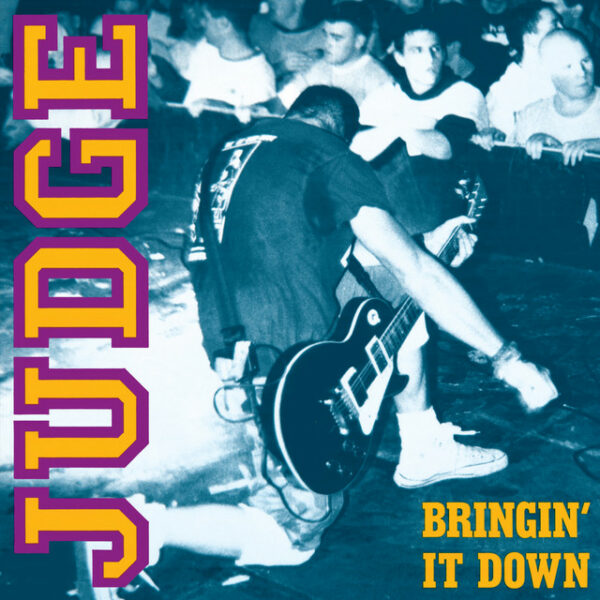
There are records you listen to more as documents than as finished works, and Chung King Can Suck It belongs to that category. Judge never had time to waste in the studio: just one three-day weekend blocked off at Chung King, before the two musicians involved headed back out on tour with their other band. The title, a frontal insult hurled at the studio that was then hosting New York rap heavyweights, says everything about the mindset: no reverence, no comfort, just an urgency to capture something before leaving.
Another Take on Bringin’ It Down
What we have here is the original version of what would become the album Bringin’ It Down, before remixing and polish. The interest then isn’t in discovering unreleased tracks, but in hearing the raw material before it gets refined. The guitar sounds drier, less thick, the voice sits more forward in the mix, almost too upfront in places, and the drum hits have that slightly muffled grain typical of takes done without a net. What you lose in sonic mass you gain in the feeling of a unique recording moment, as if you were witnessing the final rehearsal rather than the actual show.
Unfiltered Rage
The substance, though, doesn’t change: that compact rage, that sense of the heavy riff repeated to the point of nausea that made the band’s reputation extend far beyond the youth crew it came from. The structures stay the same, the chanted choruses too, but the relief shifts slightly, the transitions between sections sometimes sound more abrupt, less calculated. For someone who knows Bringin’ It Down by heart, the exercise is almost unsettling: you recognize every track while hearing them differently, like a photograph developed with different contrast.
Let’s be honest: this record only makes sense for those who already know the original album. It’s not a gateway into Judge’s world, and it would be dishonest to present it as a standalone studio album. It’s an artifact, conceived for collectors and enthusiasts who want to understand how a three-day session could produce a genre classic. The limited colored vinyl pressing reinforces this dimension as an object rather than a new musical proposition. You could fault the whole thing for not adding anything fundamentally new, and you’d be right: there’s no revelation here that overturns how you read Judge.
A Snapshot Rather Than an Album
And yet there’s something moving about hearing this less polished version, more fragile in its mixing, almost more honest in its unrefined brutality. You feel the urgency of the counted-down weekend, the pressure of time slipping away, and it gives a particular texture to tracks you thought you knew by heart anyway. It’s not a record to put in everyone’s hands, but for anyone interested in the history of New York hardcore and how a cult sound sometimes comes together in a handful of stolen hours, it’s a fascinating piece, even if necessarily secondary to the original it spawned.