Detroit has never been a kind city to those who inhabit it, and Never Ending Game echoes this on Just Another Day without attempting to prettify anything. From the very first seconds, the tone is set: dry rhythmics, riffs that advance in blocks rather than melodies, and a voice that spits more than it sings. This is Midwest hardcore as imagined: functional, unadorned, built for the pit rather than for headphones.
One step at a time
The construction of the tracks follows a relentless, almost mechanical logic. Tempos remain measured most of the time, favoring crushing weight over sweeping force, and it is precisely in this choice that the album finds its personality. No blasts, little acceleration: progress comes in fits and starts, in stages, like climbing a staircase that’s too steep. Breakdowns, when they arrive, never truly surprise, but they work because the band knows where to place them and doesn’t overexploit them across the record.
A production that doesn’t cheat
The sound is thick, grainy, with guitars that fill all the space without ever tipping into the digital saturation characteristic of some releases in the genre. You can sense a recording that prioritizes impact over refinement, which perfectly matches the band’s intention. The bass stays in the background, more there to thicken the sonic mass than to express itself on its own, and the drums hit hard, free of unnecessary reverb. This is the sound of a rehearsal pushed to its maximum, which may unsettle those seeking more texture, but gives the record a straightforward coherence that is quite effective over time.
The limits of the exercise
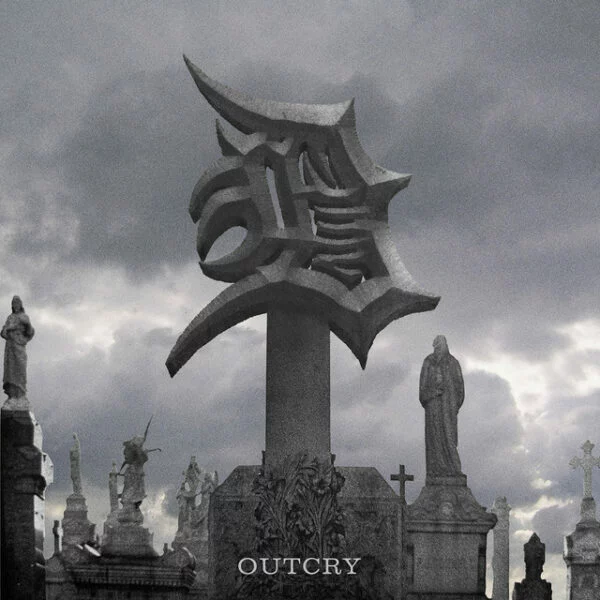
The real issue with Just Another Day is the repetition of the same formulas from track to track. Past the midpoint, the riffs resemble each other, the structures do as well, and the listener sometimes gets the impression of hearing a variation on the same song rather than a progression. The band doesn’t yet have that capacity to surprise found later on Outcry, where the songwriting seems refined and contrasts better balanced. Here, you sense a group laying down the foundations of its identity, knowing what it wants to sound like, but not yet having all the tools to vary the pleasures across an entire album.
That said, this lack of nuance doesn’t diminish the honesty of the approach. Never Ending Game doesn’t seek to seduce beyond its circle, doesn’t chase after easy melodies, and fully embraces its grounding in a raw hardcore tradition with no aesthetic compromises. Just Another Day isn’t a record that revolutionizes anything, but it fulfills its contract: hit hard, push forward, never let up the pressure. For genre fans seeking material to mosh to rather than compositional subtleties, it does the job perfectly. For others, it might be better to turn directly to the band’s later discography, where the sonic identity seems more firmly established.